In Georgetown, a Small School Cultivates Big Learning
Inside a third-grade classroom at Georgetown Community School, students monitor nutrient levels, care for fish, and harvest lettuce destined for the cafeteria salad bar.
Just outside that thriving classroom, however, the small mountain school faces a difficult reality: declining enrollment and tightening budgets.
But test scores are up. And inside one particular third-grade classroom, a much more hopeful story unfolds, one rooted in growth, curiosity, and a quiet kind of innovation that is transforming how students learn.
It’s a tension familiar to many small schools, especially in rural communities. Yet even amid these pressures, Georgetown Community School has found a way to make learning feel vibrant, relevant, and connected. At the center is a hydroponic growing system that runs the length of the classroom. It’s part science lab, part classroom ecosystem, and part catalyst for a broader shift in how students engage with their education.
From Classroom to Cafeteria
The hydroponic system didn’t emerge in isolation. It’s part of a larger evolution at the school that began a few years ago when a district bond made it possible to build a proper kitchen.
“Before that, kids were just bringing lunches to school,” Klemm explains. “We didn’t have lunch. We had some snacks, but that was it.” The addition of a kitchen opened the door to a school meal program, and eventually, with the introduction of free breakfast and lunch, the program became a vital support for families.
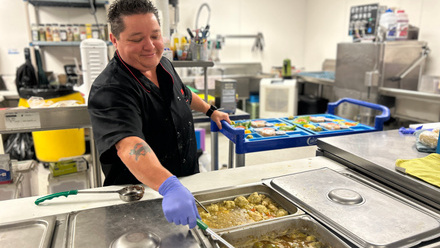
Now, with a dedicated staff member leading the kitchen, the program has expanded even further. But what makes it unique is how it connects directly back to the classroom.
“We like to call it a farm-to-school program,” Klemm says.
What began as an effort to improve student meals gradually evolved into something larger: a learning ecosystem connecting the classroom, cafeteria, and community.
A Living Lab
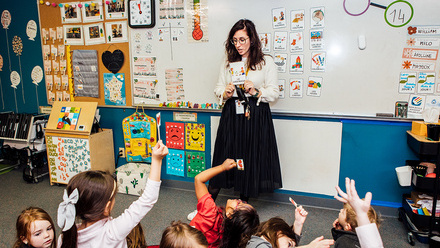
In the third-grade classroom led by teacher Ms. Singmaster, the hydroponic system is fully integrated into daily learning. It’s not a standalone project or a once-a-week activity. It’s woven into the rhythm of the day.
Students monitor nutrient levels, test pH balances, and care for the fish. They ensure the lights are timed properly. They observe, question, experiment, and adjust.
“They’re doing everything,” Singmaster says. “They’re coming up with ideas of what they should try next and testing and refining the plan.”
The system currently produces a variety of crops, including leafy greens like butter lettuce and kale, tomatoes, strawberries, peas, chives, and even grapes growing along a vine. A sweet potato experiment recently caught students’ attention when a root began to emerge, sparking spontaneous observation and discussion.
“We were walking in one morning, and a student noticed it right away,” Klemm recalls. “They stopped to look at it. That’s the kind of learning that’s happening. It’s driven by the kids.”
While Ms. Singmaster provides guidance, students take ownership of troubleshooting and experimentation. That autonomy is part of what makes the program so powerful.
Pride, Purpose, and Possibility
Students develop a sense of responsibility and pride in their work, especially when they see it come full circle. When crops are ready, they’re harvested and tasted in the classroom. If there are enough, they're delivered to the cafeteria, where they’re added to the salad or sandwich bar.
“They have pride in what they’re growing and in what they’re bringing down to the kitchen,” Klemm says as one student offers us a taste of a pretty, purple onion flower. That connection — to food, to health, to real-world application — is intentional.
“This grant has helped us think creatively about how we get kids involved,” she explains. “How do we bring in healthy options and allow them to take accountability for it too?”
Students aren’t just studying science; they’re living it. And they’re not just hearing about nutrition; they’re contributing to it.
Learning that Extends Beyond the Classroom
The hydroponics program also connects to broader school initiatives. Students grow spider plants and sell them as part of a fundraiser, recently earning enough to fund a field trip to an animal sanctuary in Colorado Springs.
While all students in the school have opportunities to engage with the hydroponic system, its deepest integration remains in the third-grade curriculum, where it serves as a foundation for interdisciplinary learning.
Ask Singmaster what she loves most about the program, and her answer is immediate: “The hands-on learning, the excitement, and the independence it fosters,” she says. “It generates a lot of pride.”
In a small school fighting to grow, that sense of ownership, curiosity, and purpose may be the clearest sign of what’s possible.
Georgetown Community School is one of twelve charter schools participating in the League's Rural School Food Project (RSFP). Funded by a grant from The Colorado Trust, the project strives to increase access to nutritious and affordable food at rural charter schools across the western slope and northern Colorado.