
Bringing the Community to the Cafeteria at Battle Rock
At Battle Rock Charter School, knowing where your lunch comes from can sometimes mean knowing the person who raised it.
The beef in the burgers, tacos and spaghetti served this year comes from cattle raised by the family of a Battle Rock staff member. The beans come from nearby Dove Creek. Flour for muffins and breakfast breads is milled in Cortez. And more locally grown and produced foods are making their way onto the menu.
For Student Nutrition Manager Kanto McPherson, a $5,000 Local Food Program award is helping turn the school cafeteria into another place for students to learn about — and taste — the agricultural community around them.
“I want to highlight to the students how cool this is,” McPherson says. “That we can even talk to the rancher who raised it. Since college, I’ve been taught to look for ‘newsworthy events’ to bring into my curriculum. To me, bringing so many local foods into our school and introducing them to our students is exactly that.”
Starting from Scratch
Food has long been McPherson’s wheelhouse. In addition to serving as a Family and Consumer Sciences teacher, she now prepares breakfast and lunch for Battle Rock Charter School and at nearby Kwiyagat Community Academy, serving about 150 students between the two schools — or roughly 300 meals each day.
“I am cooking scratch recipes, exposing students to chicken masala, ramen bowls, different types of international cuisine,” McPherson says.
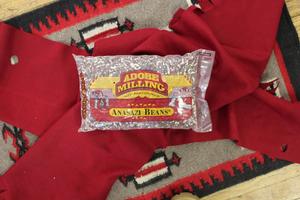
Adobe Milling in Dove Creek is supplying a distinctive Southwestern bean that McPherson is excited about. “The kids are eating Anasazi beans now,” she says. “They are unique and beautiful dry beans with a slightly sweet note.”
Cortez Milling provides flour McPherson uses for breakfast favorites like banana bread, coffee cake and blueberry muffins. The local mill relies on wheat grown in the region and processes blue cornmeal using corn sourced from Bow & Arrow Brand.
McPherson is using blue and yellow cornmeal in cakes, too, as she looks for opportunities to connect school meals with the cultures represented among her students.
“We have a pretty big Indigenous population, and I want more authentic Indigenous recipes in our meal program,” she says.
Discovering What’s Close to Home
Other Colorado products are finding their way onto the menu as McPherson expands the program. The school has purchased tortilla chips from Durango-based Zia Tortilla Company, which makes its chips using locally sourced corn and Colorado sunflower oil. McPherson is also looking to Pueblo Seed & Food Co. for wheat flour and sliced bread.
Pueblo Seed has an especially close connection to Battle Rock. Its farm is in McElmo Canyon, where it grows heritage grains, seeds and other crops, while its Seed & Bakehouse in downtown Cortez mills grains and produces bread and other foods.
“I'm excited to use the local foods and grateful for the relationships we've built at Battle Rock to support these partnerships,” says McPherson.
And perhaps no relationship illustrates that better than the beef being served this year.
The cattle belong to Tyrell Sturman, whose mother, Tamara Sturman, works at Battle Rock as a paraprofessional and helps in the kitchen. Tamara attended Battle Rock herself, making the connection between ranch, school and cafeteria especially personal.
“I think it is wonderful,” Sturman says. “I like knowing that the kids have quality, healthy, grass-fattened beef to eat.”
For Sturman, one of the biggest benefits is simply knowing the story behind the food.
“We know where it came from and that it was healthy and good,” she says.
Local Food as a Practical Solution
Buying locally also provides something less visible but important for a small rural school nutrition program: flexibility.
Battle Rock faces challenges familiar to many small rural programs. Food deliveries can be difficult to coordinate, and the school has limited cold-storage capacity. McPherson would like another freezer, but the building currently lacks the electrical capacity to support one.
At times, that can leave the kitchen stretched between deliveries.
Local purchasing gives McPherson another option. Instead of depending entirely on food traveling through conventional distribution channels, she can increasingly look around her own community for some of what she needs.
It is a practical benefit layered onto the educational and community connections the program is creating.
For McPherson, the $5,000 award is ultimately about more than swapping one ingredient for another. It’s allowing her to introduce students to new flavors, bring more scratch cooking into the cafeteria and show them that some of the people producing their food are their neighbors.
It also brings new meaning to Battle Rock’s motto: “Where learning and meals are always an adventure!”
That spirit of discovery feels right at home at a school that has been part of McElmo Canyon since 1915 — and still holds classes in its original sandstone schoolhouse.
“Battle Rock is a magical place,” McPherson says.
And now, that adventure includes discovering just how much good food can be found close to home.
About Nourish Colorado
Nourish Colorado is a non-profit organization committed to increasing access to nutritious, local food and building a more equitable food system across Colorado. We conduct policy advocacy for systems change, manage programs that increase food access and support local producers, and work alongside community partners to inspire collective action.